
EV Battery Replacement Cost: What an Out-of-Warranty Battery Can Really Cost
There is no reliable universal price range for an EV battery replacement.
Published consumer guides often cite an EV battery replacement cost of approximately $5,000 to $20,000 USD, and AAA currently uses that range while noting that pricing depends on the vehicle's make, model, battery size and warranty coverage.
That range can be useful as a general starting point, but EV owners should not treat $20,000—or even $25,000—as a maximum battery replacement cost.
Complete OEM high-voltage battery replacement quotes can rise dramatically above generic online estimates, particularly for premium EVs, large battery assemblies and vehicles where the manufacturer supplies the complete battery as an expensive service part.
EVRiskIndex has reviewed or documented examples of full battery replacement exposure reaching approximately:
-
Jaguar I-PACE: around C$68,000 for a complete high-voltage battery replacement
-
Tesla: some complete battery replacement scenarios approaching C$50,000
-
Porsche EV models: complete high-voltage battery replacement quotes approaching C$78,000
These figures are not average replacement prices for every Jaguar, Tesla or Porsche. They illustrate how far an actual dealer or OEM battery replacement quote can move beyond the commonly published $5,000–$20,000 estimate.
Currency, taxes, model year, battery part number, vehicle configuration, labor, diagnostic requirements and the type of replacement assembly can also materially affect the final invoice.
There is no simple EV battery replacement cost by kWh
Battery size matters, but battery capacity alone does not determine electric car battery replacement cost.
A 90 kWh battery does not automatically cost three times as much to replace as a 30 kWh battery, and two EVs with similarly sized battery packs can receive completely different repair quotes.
The final EV battery pack replacement cost can depend on:
-
the exact make, model, model year and battery configuration;
-
the manufacturer's replacement battery price;
-
whether the failure requires a complete battery pack replacement;
-
whether an approved component- or module-level repair exists;
-
whether the replacement battery is new, remanufactured or another approved service assembly;
-
battery availability and supply-chain conditions;
-
diagnostic and high-voltage safety procedures;
-
removal and installation requirements;
-
coolant-system work, programming or calibration where applicable;
-
labor rates, taxes and additional parts; and
-
whether the repair qualifies for an EV battery warranty, safety recall or manufacturer program.
The U.S. Department of Energy notes that manufacturers generally do not publish replacement-battery pricing and that an out-of-warranty replacement can represent a significant expense.
Before authorizing an out-of-pocket high-voltage battery replacement, verify the diagnosis, warranty status and recall status first.
Key Takeaways
EV battery replacement cost cannot be reduced to one national price range. Generic estimates may help consumers understand the potential expense, but actual OEM battery replacement quotes can reach tens of thousands of dollars above those commonly published figures.
| Point | What EV Owners Need to Know |
|---|---|
| No reliable maximum replacement price | Published estimates such as $5,000–$20,000 USD should not be interpreted as an industry-wide ceiling. Premium OEM full-pack replacements can be dramatically more expensive. |
| Battery size does not determine the invoice | kWh capacity influences battery manufacturing economics, but make, model, battery architecture, OEM parts pricing, repairability and service procedures can have a major effect on the final replacement quote. |
| Wholesale $/kWh is not retail replacement cost | BloombergNEF reported average lithium-ion battery-pack pricing of about $108/kWh in 2025, but that is an industry pricing benchmark—not the price an EV owner can expect to pay for an installed OEM service replacement. |
| EV battery warranty comes first | Many manufacturers provide substantial high-voltage battery warranty coverage, but the exact years, mileage, defects covered and capacity-loss provisions vary by manufacturer and vehicle. The Department of Energy notes that many manufacturers offer approximately 8-year/100,000-mile battery warranties. |
| A battery fault does not automatically mean a new battery | Owners should obtain the actual diagnosis and determine whether the manufacturer provides a repair below the complete-pack level for that specific failure. |
| Recall status should be checked before paying | For U.S. vehicles, NHTSA provides a VIN-based recall lookup, and open safety-recall repairs are performed free through the manufacturer's dealership. |
| EVRiskIndex can help review the paperwork | EVRiskIndex's Invoice Analyzer can help owners examine repair estimates, identify line items that warrant questions and organize evidence before authorizing an expensive EV repair. It does not replace a qualified high-voltage diagnosis or determine warranty eligibility. |
Table of Contents
-
How is EV battery replacement cost actually calculated?
-
Real-world EV battery replacement costs by model
-
What factors change an EV battery replacement quote?
-
Does your EV battery warranty cover replacement?
-
What are the alternatives to a full EV battery replacement?
-
How to verify an EV battery repair quote and spot questionable charges
-
Is EV battery replacement worth the cost?
-
How to get an accurate EV battery replacement quote
-
What EV owners should do before authorizing battery replacement
-
Why EV battery replacement pricing needs more transparency
-
Verify your EV battery repair estimate before you pay
How Is EV Battery Replacement Cost Actually Calculated?
One of the biggest mistakes in EV battery replacement cost estimates is starting with an industry battery price per kilowatt-hour and treating that figure as though it were the retail price of an OEM replacement battery.
They are not the same thing.
BloombergNEF reported that average lithium-ion battery-pack prices reached approximately $108 per kWh in 2025. Its survey measures battery-industry pricing across applications and provides valuable insight into manufacturing economics and long-term battery-price trends.
But an EV owner cannot take that $108/kWh figure, multiply it by the capacity of their vehicle's battery and accurately calculate what a dealership should charge for a replacement.
Battery manufacturing cost is not battery replacement cost
There are several different numbers involved:
Industry battery pack price
The average price paid within the battery-production and vehicle-manufacturing supply chain.
OEM service battery price
What the manufacturer charges through its parts and service network for the specific replacement assembly required by that vehicle.
Installed EV battery replacement cost
The final customer invoice after the replacement part, diagnostics, labor, required procedures, additional components, taxes and other applicable charges are included.
These numbers can be very different.
For example, a theoretical calculation based on a 90 kWh battery multiplied by an industry-average $/kWh figure does not establish what Jaguar, Tesla, Porsche, Ford, GM, Nissan or another manufacturer will charge for that battery through its service network.
That is why the original "$108/kWh × battery size + labor" method should not be used to determine whether an EV battery replacement quote is fair.
What actually drives a high-voltage battery replacement quote?
A more useful EV battery replacement cost calculator would have to consider far more than battery capacity.
The most important variables include:
-
exact vehicle and model year;
-
battery variant and OEM part number;
-
complete-pack versus component-level repair;
-
new versus remanufactured replacement assembly;
-
manufacturer parts pricing;
-
availability of the battery;
-
required diagnostic procedures;
-
high-voltage isolation and safety procedures;
-
removal and installation operations;
-
coolant or thermal-management work where required;
-
programming, software or calibration procedures;
-
labor;
-
taxes and applicable fees; and
-
warranty, recall or manufacturer assistance.
The Department of Energy specifically notes that manufacturers typically do not publicly publish replacement-battery prices, making model-specific service estimates especially important.
Why falling battery prices do not automatically mean cheap replacement batteries
Battery manufacturing costs have fallen substantially over time, which is positive for EV manufacturing and future vehicle affordability.
But a declining industry battery price per kWh does not guarantee an equivalent decline in the retail cost of an OEM replacement battery.
Service-part pricing can be affected by production volume, inventory, logistics, battery architecture, model age and manufacturer parts policies.
For EV owners, the number that ultimately matters is not the global $/kWh benchmark.
It is the documented price of the correct replacement part and the complete itemized repair required for their specific vehicle.
Real-World EV Battery Replacement Costs by Model
Generic averages become less useful when an owner is dealing with a specific EV.
The difference between a Nissan LEAF battery replacement cost, Tesla battery replacement cost, Jaguar I-PACE battery replacement cost and Porsche EV battery replacement cost can be enormous.
Even within one model, battery pricing may vary by model year, battery capacity, replacement-part number, availability and whether the repair involves an entirely new battery assembly or another manufacturer-approved solution.
AAA's own published examples demonstrate substantial model-to-model variation. Its current estimates range from about $5,000–$16,000 for a Nissan LEAF, approximately $16,000–$17,500 for a Chevrolet Bolt EV, $10,000–$15,000 for a Tesla Model 3, and $30,000+ for a new BMW i3 battery. AAA also cautions that owners should obtain precise estimates for their individual vehicle because replacement prices can change.
But even those published figures should not be interpreted as maximum possible prices.
EVRiskIndex has encountered substantially higher complete OEM battery replacement quotes in the Canadian market, including approximately C$68,000 for a Jaguar I-PACE and premium-EV examples approaching C$50,000–C$78,000.
The lesson is not that every luxury EV will require a $50,000+ battery.
The lesson is that there is no safe generic ceiling for EV battery replacement cost.
Model-specific considerations
Nissan LEAF battery replacement:
Older LEAF models have been on the road long enough to support a larger secondary repair and replacement market than many newer EVs. Owners should still verify battery compatibility, state of health, replacement warranty and installation requirements.
Chevrolet Bolt EV battery replacement:
Before paying for any high-voltage battery repair, owners should check the VIN for outstanding recalls. U.S. owners can use NHTSA's official VIN recall lookup.
Tesla battery replacement:
Do not rely on a generic "Tesla battery replacement cost." Model, variant, battery assembly and the actual diagnosis matter. A Model 3, Model Y, Model S and Model X should not be assumed to share the same replacement economics.
Jaguar I-PACE battery replacement:
A complete OEM high-voltage battery quote can be extremely expensive. Owners facing a five-figure I-PACE battery estimate should verify the diagnosis, battery warranty, exact part being proposed and whether the entire battery assembly is actually required.
Porsche EV battery replacement:
Premium-EV battery assemblies can create very high financial exposure once outside applicable warranty coverage. A complete written diagnosis and exact battery part information become especially important before authorization.
What Factors Change an EV Battery Replacement Quote?
Two EV battery replacement estimates for apparently similar vehicles can differ substantially because the final price depends on much more than battery capacity.
1. Make, model, model year and battery configuration
This is one of the most important variables.
Manufacturers use different battery architectures, cooling systems, service procedures, pack configurations and replacement parts.
Even two trims of the same EV may use different battery assemblies.
2. Complete battery replacement versus battery repair
A high-voltage battery fault does not automatically prove that the complete battery pack must be replaced.
Depending on the vehicle and failure, the manufacturer may provide procedures for replacing or repairing a component below the complete-pack level.
On other vehicles or for other failures, the approved procedure may require replacement of a larger assembly.
This needs to be established from the actual diagnosis and manufacturer repair procedure, not assumed from a generic online article.
3. OEM battery parts pricing
Battery capacity tells you how much energy the pack stores.
It does not tell you what the manufacturer charges for that pack as a replacement service part.
OEM pricing can therefore have a major impact on out-of-warranty EV repair cost.
4. Battery chemistry
LFP, NMC and other battery chemistries have different manufacturing economics. BloombergNEF's research demonstrates meaningful differences in industry pack pricing between battery technologies.
However, chemistry alone should not be used to calculate a consumer's replacement invoice.
5. New, remanufactured or used battery
Depending on the vehicle, owners may encounter:
-
new OEM replacement batteries;
-
manufacturer-remanufactured assemblies;
-
independent remanufactured batteries; or
-
used batteries removed from donor vehicles.
Those options are not equivalent.
Warranty, remaining battery health, compatibility, testing standards and installation requirements should all be considered.
6. Diagnostic and installation requirements
High-voltage battery work involves specialized safety procedures and vehicle-specific repair instructions. The Department of Energy notes that EV high-voltage systems commonly operate between approximately 400 and 1,000 volts.
That is one reason owners should use a facility qualified to diagnose and repair the specific high-voltage system rather than judging a quote purely by labor price.
7. Battery availability
A technically repairable vehicle may still face a high replacement quote if the required OEM battery is difficult to obtain, supplied only as a larger assembly or has limited service-part availability.
8. Warranty and recall status
This can change the owner's financial exposure from tens of thousands of dollars to little or no customer-pay battery cost if the failure qualifies for coverage.
That is why EV battery warranty verification and VIN recall checking should happen before repair authorization.
EVRiskIndex Tip: When a repair facility recommends a complete high-voltage battery replacement, ask for the diagnosis in writing. Request the relevant fault codes, test results, identified failed component and the reason the manufacturer's repair procedure requires the proposed battery assembly. The purpose is not to tell the technician how to perform the repair—it is to ensure you understand what evidence supports a potentially five-figure decision.
Does Your EV Battery Warranty Cover Replacement?
Before researching how much an EV battery costs to replace, determine whether you should be paying for the repair at all.
The U.S. Department of Energy notes that many EV manufacturers provide approximately 8 years or 100,000 miles of high-voltage battery warranty coverage. However, the exact warranty varies by manufacturer, model, model year and market.
Do not assume that every EV has:
-
the same warranty period;
-
the same mileage limit;
-
the same battery-capacity guarantee;
-
the same state-of-health threshold; or
-
the same definition of a covered battery failure.
Battery defect coverage and battery capacity coverage are not necessarily the same
An EV battery warranty may contain different provisions for:
-
manufacturing defects;
-
component failures;
-
high-voltage battery faults; and
-
gradual loss of usable battery capacity.
A percentage such as 70% state of health (SoH) should therefore never be presented as a universal EV warranty standard.
Read the actual battery warranty for the exact vehicle.
Warranty repair
If the diagnosed battery failure meets the manufacturer's warranty conditions and remains within the applicable time and mileage limits, the repair may qualify for manufacturer warranty coverage.
The written warranty terms determine eligibility.
Safety recall
A safety recall is different from a normal warranty claim.
For U.S. vehicles, NHTSA provides an official VIN-based recall lookup. NHTSA states that open vehicle safety-recall repairs are performed free through the manufacturer's dealership.
Manufacturer goodwill or assistance
A manufacturer may sometimes provide financial assistance outside normal warranty coverage.
This type of assistance is discretionary and should never be presented as guaranteed.
EV battery warranty checklist
Before approving an expensive battery replacement:
-
Confirm the vehicle's original in-service date.
-
Confirm the current mileage.
-
Obtain the manufacturer's battery warranty applicable to the exact model year and market.
-
Determine whether the diagnosis involves a defect, capacity-loss complaint or another battery-system failure.
-
Obtain the diagnostic results in writing.
-
Check the VIN for an open safety recall.
-
Ask the manufacturer or authorized dealer whether any applicable service campaign or other program exists.
-
If coverage is declined, request the reason for the denial in writing.
-
Keep every diagnostic report, repair order, estimate, invoice and manufacturer communication.
For a $20,000, $50,000 or $70,000+ high-voltage battery replacement quote, documentation can become extremely important.
What Are the Alternatives to a Full EV Battery Replacement?
A complete new OEM battery pack is not automatically the only possible repair for every EV battery problem.
At the same time, owners should be cautious of anyone promising a cheap module or cell repair without first establishing that the vehicle and failure actually support that repair strategy.
Possible EV battery repair and replacement options may include:
-
manufacturer-authorized component repair;
-
battery-module replacement where supported;
-
complete new OEM battery replacement;
-
OEM remanufactured battery replacement;
-
independent remanufactured battery replacement; or
-
a compatible used battery assembly for certain older vehicles.
Availability depends heavily on the specific vehicle.
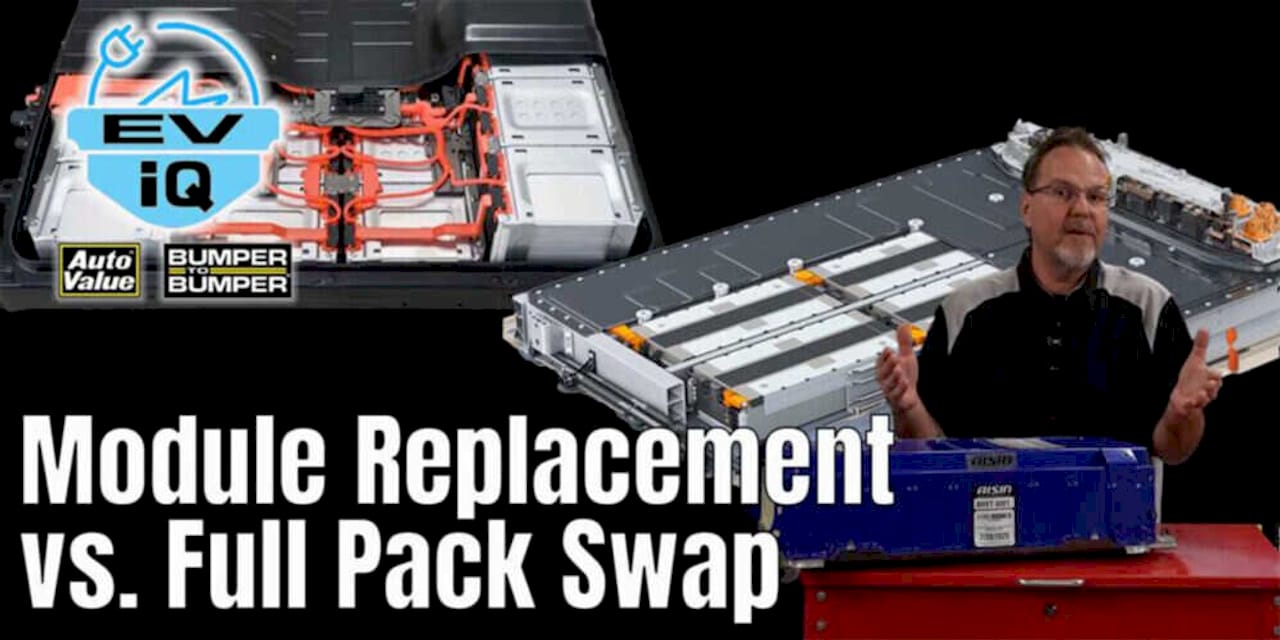
Module or component-level EV battery repair
Some high-voltage battery designs and manufacturer repair procedures permit technicians to service components below the complete battery-pack level.
When available and appropriate, this can potentially avoid replacing an otherwise serviceable complete battery assembly.
But there is no universal $1,500–$5,000 module-repair price, and module-level repair should not be promised simply because a battery is described as "modular."
The correct questions are:
What failed?
What does the manufacturer's diagnostic procedure say?
Is that failed component separately serviceable on this exact vehicle?
What repair is approved for this particular fault?
That distinction is critical when comparing EV battery repair vs. replacement cost.
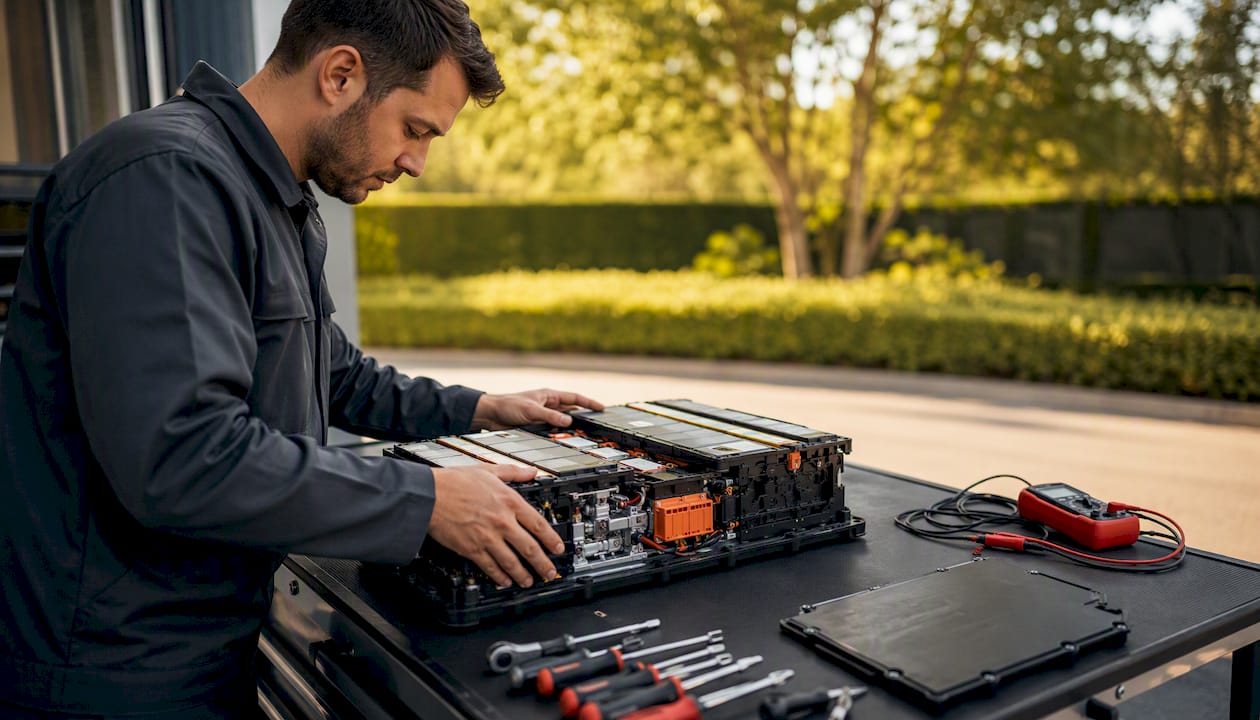
A remanufactured or refurbished EV battery can be an alternative to a new OEM high-voltage battery on some vehicles, but the terms remanufactured and refurbished do not describe one standardized process.
Depending on the supplier and battery design, a replacement pack may contain tested components from previously used batteries, repaired or replaced modules, or other reconditioned components. The testing procedures, remaining capacity, warranty and quality-control standards can vary substantially between suppliers.
For that reason, EV owners should not assume that a remanufactured battery will always cost 30–50% less than a new OEM battery. There is no reliable universal percentage discount. Published replacement-market examples show that pricing varies considerably by model, pack availability and supplier.
Before accepting a remanufactured or refurbished EV battery, ask for:
-
the exact battery part number and compatibility with your vehicle;
-
whether the battery is OEM-remanufactured or independently rebuilt;
-
documented battery health or usable-capacity testing;
-
what components were repaired or replaced, if that information is available;
-
confirmation that the battery and thermal-management system were inspected according to the supplier's procedure;
-
the written battery warranty and installation warranty;
-
any mileage or time limitations on that warranty; and
-
what happens if the replacement battery develops a fault after installation.
Testing matters. Research into retired lithium-ion batteries shows that evaluating their remaining condition is an important part of determining whether batteries or components are suitable for further use.
Used EV Battery Packs
A used EV battery pack removed from another vehicle can sometimes reduce the upfront parts cost, particularly for older EVs where new OEM battery availability is limited.
But a used battery should not automatically be described as either the "cheapest" option or the "highest-risk" option. The condition of one used battery can be very different from another.
The important questions are what battery you are buying, what condition it is actually in and what protection you receive if it fails.
Before installing a used high-voltage battery, verify:
-
the correct OEM part number or compatible battery revision;
-
the donor battery's age and available history, where obtainable;
-
measured usable capacity or another documented battery-health assessment;
-
diagnostic test results supplied with the battery;
-
whether the battery has been inspected for physical or electrical faults;
-
the seller's return policy;
-
the parts warranty, if any; and
-
the installer's labor warranty.
Do not rely solely on a dashboard range estimate or an undocumented state-of-health percentage when evaluating an expensive used battery.
EV Battery Reconditioning and Cell Balancing
Claims about EV battery reconditioning need particular care.
Cell balancing can sometimes improve the usable performance of a battery when differences between cells or modules are restricting how much of the pack's available capacity the battery-management system can use. Research has demonstrated that cell imbalance can reduce usable pack capacity and that balancing can address some imbalance-related losses.
However:
Cell balancing or BMS recalibration does not reverse the physical and chemical degradation of lithium-ion cells.
Lithium-ion batteries experience genuine capacity loss as they age and cycle. A software reset or recalibration may correct an inaccurate battery-management-system estimate in an appropriate case, but it should not be marketed as magically restoring capacity that has been permanently lost through cell degradation.
Therefore, an owner should be cautious of any service promising to "restore your EV battery to like-new capacity" without diagnostic evidence explaining what condition is being corrected.
Module-Level EV Battery Repair
Some EV battery architectures can support repairs below the complete-pack level. In the right vehicle and for the right failure, this can potentially avoid replacement of an otherwise serviceable battery assembly.
Battery modules themselves exist partly because pack architecture can allow portions of a larger battery system to be configured and, in some designs, replaced. But repairability is highly vehicle-specific.
There is therefore no responsible universal $1,500–$5,000 module-repair price.
Before assuming that a module repair is possible, determine:
-
which component actually failed;
-
what the diagnostic results show;
-
whether that component is separately serviceable;
-
whether the manufacturer's repair procedure permits that repair;
-
what parts are required;
-
and what warranty applies afterward.
A battery being physically constructed from modules does not automatically mean an independent shop or dealership can replace one module on that particular vehicle.
EV Battery Replacement Options Compared
| Option | Replacement Cost | Warranty | What You Need to Verify | Availability |
|---|---|---|---|---|
| New OEM battery pack | No universal range. Vehicle-specific OEM quotes can range from several thousand dollars to tens of thousands, and some premium-EV full-pack quotes can be exceptionally high. | Manufacturer-specific | Exact OEM part number, diagnosis, warranty coverage, recall eligibility and complete installed quote | Vehicle and manufacturer dependent |
| OEM-remanufactured battery | Model-specific; may cost less than a new OEM assembly, but no universal discount applies | Manufacturer-specific | Part number, remanufacturing status, capacity coverage and written warranty | Available only for certain vehicles |
| Independent remanufactured/refurbished battery | Supplier- and model-specific; no reliable 30–50% rule | Supplier-specific | Testing documentation, measured battery condition, components replaced, compatibility and warranty | Strongly model and market dependent |
| Used battery pack | Depends on model, condition, age, supply and remaining battery health | May be limited or unavailable | Battery identity, compatibility, condition testing, seller warranty and installer warranty | More common for some older/high-volume EVs |
| Module or component repair | Repair-specific; no universal price range | Manufacturer- or repairer-specific | Exact failed component, diagnostic evidence and whether the vehicle supports that repair | Highly model- and failure-dependent |
| Balancing / BMS-related service | Diagnostic- and service-specific | Service-provider specific | Whether an actual imbalance or BMS issue has been diagnosed | Not a substitute for physically degraded or failed cells |
How to Verify an EV Battery Replacement Quote Before You Pay
Before authorizing an expensive EV battery replacement, review the diagnosis and written estimate—not just the total price.
A high-voltage battery quote can include the battery assembly, diagnostic time, labor, cooling-system work, programming, additional parts, taxes and other vehicle-specific procedures. More importantly, a battery-system fault does not automatically prove that the complete battery pack must be replaced.
For an out-of-warranty repair that may cost tens of thousands of dollars, the documentation supporting the recommendation matters.
1. Request the Battery Diagnosis in Writing
Ask the repair facility for documentation showing why the high-voltage battery repair or replacement was recommended.
Depending on the vehicle and diagnostic procedure, this may include:
-
diagnostic trouble codes (DTCs);
-
battery-management-system fault information;
-
state-of-health or usable-capacity information, where applicable;
-
isolation or voltage test results;
-
technician findings;
-
manufacturer diagnostic-test results; and
-
the final identified failure or component requiring repair.
Do not assume that every EV diagnosis will produce individual cell or module-voltage reports. Diagnostic procedures vary significantly by manufacturer.
The important question is:
What evidence supports the proposed repair?
A written recommendation is considerably more useful to the owner than being told simply that the vehicle “needs a battery.”
2. Ask Whether the Entire EV Battery Pack Actually Requires Replacement
Do not automatically assume that a battery-system fault means every component inside the battery has failed.
Ask:
“What component has been identified as failed, and does the manufacturer’s repair procedure require replacement of the complete high-voltage battery assembly for this fault?”
Some vehicles and failures may allow a component-, module- or subsystem-level repair. Others may require replacement of a larger assembly or the complete battery.
What matters is the manufacturer-approved repair procedure for your specific vehicle and failure.
This is more meaningful than simply asking whether “each module was tested.”
3. Verify the Exact EV Battery Part Number
An estimate for a high-voltage battery replacement should clearly identify what is being installed.
Ask for:
-
the replacement battery part number;
-
battery description or revision;
-
whether the battery is new, OEM-remanufactured, independently remanufactured or used;
-
whether a core return is required;
-
what accessories or components are included with the battery; and
-
the warranty covering the replacement assembly.
Do not assume that every OEM part number will be easily searchable online. Manufacturer parts systems differ.
If the estimate only says “EV battery” or “battery assembly” without enough information to identify the actual replacement component, request clarification before authorizing the repair.
4. Do Not Use a Universal EV Battery Labor-Hour Rule
There is no responsible universal rule stating that an EV battery replacement should take four, six or eight hours.
Labor requirements can vary dramatically according to:
-
make and model;
-
battery architecture;
-
diagnostic procedure;
-
battery removal procedure;
-
required disassembly;
-
cooling-system service;
-
additional damaged components;
-
programming or calibration;
-
post-repair testing; and
-
manufacturer safety procedures.
Instead of comparing the estimate with a generic internet labor figure, ask the repair facility:
“How many labor hours are being charged, what operations do those hours cover, and what manufacturer repair procedure is being followed?”
A large labor charge may deserve an explanation, but the number alone does not prove an overcharge.
5. Review Every Major Line Item on the EV Repair Estimate
An expensive electric car battery replacement quote should be understandable.
Look for charges such as:
-
diagnostic labor;
-
high-voltage battery assembly;
-
removal and installation labor;
-
battery coolant or thermal-management service;
-
seals, fasteners, brackets or related replacement parts;
-
software programming or calibration;
-
post-repair testing;
-
freight or shipping where applicable;
-
core charges or credits;
-
shop supplies;
-
environmental or disposal charges where applicable;
-
taxes; and
-
any other additional repair identified during diagnosis.
Not every repair will contain every one of these charges.
The goal is not to demand a particular invoice format. The goal is to understand what you are paying for and why it is required.
If a five-figure estimate consists primarily of one unexplained “battery service” charge, ask for a more detailed explanation before approving the work.
6. Check EV Battery Warranty and Recall Coverage Before Paying
This step can be more important than negotiating the repair price.
Before accepting an out-of-pocket battery replacement, verify:
-
the vehicle's original in-service date;
-
current mileage;
-
the exact high-voltage battery warranty;
-
whether the diagnosed failure is covered;
-
whether capacity-loss coverage applies;
-
whether an open safety recall affects the vehicle;
-
whether a manufacturer service campaign applies; and
-
whether any manufacturer assistance or goodwill review is available.
Do not rely on a generic statement that “EV batteries have an 8-year warranty.”
The exact warranty terms for your make, model, model year and market determine the coverage.
7. Ask What Warranty Comes With the Replacement Battery
If you are paying for an EV replacement battery, ask what happens if that battery develops a problem later.
Get the warranty in writing and verify:
-
warranty duration;
-
mileage limitation;
-
parts coverage;
-
labor coverage;
-
capacity-loss coverage, if any;
-
transferability, if applicable; and
-
exclusions.
A new OEM battery, OEM-remanufactured battery, independent rebuilt battery and used battery may carry very different warranty protection.
8. Consider a Second EV Battery Diagnosis
When a complete high-voltage battery replacement represents a major financial decision, a second qualified diagnosis can be valuable—particularly if:
-
the diagnosis is unclear;
-
the repair facility cannot explain what failed;
-
the complete battery is being replaced because of one reported fault;
-
warranty coverage has been denied;
-
the estimate approaches or exceeds the value of the vehicle; or
-
another repair option may exist.
Do not use an arbitrary price such as $10,000 as the point when a second opinion suddenly becomes worthwhile.
For one owner, a $7,000 repair may justify another diagnosis. For another, it may be a $50,000 battery estimate.
The financial significance of the repair to you and the vehicle is what matters.
9. Preserve the Original Estimate and Diagnostic Records
Before authorizing repairs, save copies of:
-
the original estimate;
-
diagnostic report;
-
repair order;
-
battery-health information;
-
DTC or fault-code documentation;
-
photographs or inspection reports, where provided;
-
warranty communications;
-
manufacturer correspondence;
-
revised estimates; and
-
the final invoice.
If an estimate changes later, the original document provides a record of what was originally diagnosed, recommended and quoted.
EVRiskIndex Tip: Keep the original file rather than relying only on screenshots. PDFs, emailed estimates and original repair orders can preserve part numbers, dates, labor descriptions and other details that may become important during a warranty escalation or billing dispute.
Can an EV Battery Replacement Quote Be Overpriced?
A high price by itself does not prove an EV repair estimate is excessive.
As this guide demonstrates, a complete OEM battery can legitimately cost tens of thousands of dollars on certain vehicles.
The better question is whether the estimate is supported, documented and internally consistent.
Potential issues worth questioning can include:
-
a replacement part that cannot be clearly identified;
-
duplicated labor or parts;
-
unexplained fees;
-
a diagnosis that does not clearly support the proposed repair;
-
conflicting descriptions of what failed;
-
charges associated with work that appears to be covered by an applicable recall or warranty;
-
significant estimate changes without explanation; or
-
repeated parts replacements that warrant further clarification.
These are review signals—not automatic proof of an overcharge or misdiagnosis.
Use EVRiskIndex to Review Your EV Repair Estimate
The EVRiskIndex AI Invoice Analyzer is designed to help EV owners review complicated dealership and repair-shop estimates before making an expensive repair decision.
It can help organize invoice information, identify line items or patterns that deserve a closer look, and give the owner a clearer set of questions to raise with the repair facility.
For a high-voltage battery replacement quote, that review may help surface issues such as:
-
unclear parts descriptions;
-
labor entries that need explanation;
-
repeated charges;
-
missing or inconsistent information;
-
repair-history patterns worth reviewing; and
-
areas where additional documentation should be requested.
The Invoice Analyzer should not be treated as proof that a dealership has overcharged you, proof of a misdiagnosis, or a substitute for a qualified high-voltage battery technician.
Its purpose is to help consumers understand the paperwork, preserve evidence and know what to verify before authorizing a potentially five-figure—or even substantially higher—EV battery repair.
Is EV battery replacement actually worth it?
Not every loss of range or battery warning justifies a full high-voltage battery replacement. U.S. Department of Energy data citing a study of about 15,000 plug-in vehicles found battery replacements due to failure were about 1.5% for model years 2011–2023, excluding recalls. For model years 2016–2023, failure-related replacement rates were well under 1% in that dataset.
The decision should be based on the diagnosed failure, EV battery warranty or recall coverage, usable range, available repair options, vehicle value, and the actual written replacement quote—not a universal state-of-health threshold.
A better replacement-vs.-keep framework:
-
Still under battery warranty or affected by a recall: pursue coverage before authorizing customer-pay work.
-
Battery degradation but the vehicle still meets your needs: a lower SoH reading alone does not automatically mean the pack needs replacement.
-
A repair below full-pack level is approved for the diagnosed fault: compare that option with complete replacement.
-
Full-pack replacement is required: compare the verified installed quote, replacement-battery warranty, vehicle condition, market value, and how long you plan to keep it.
-
Repair cost approaches or exceeds vehicle value: replacement may still make sense in some cases, but the decision should be based on your specific vehicle and needs—not a generic percentage rule.
BloombergNEF reported average lithium-ion battery-pack prices of about $108/kWh in 2025. Goldman Sachs had previously projected that industry battery prices could move toward $80/kWh by 2026. Those are battery-industry benchmarks and forecasts, not retail OEM service-part prices. Falling manufacturing costs therefore do not guarantee that an expensive OEM battery replacement quote will fall by the same percentage.
How to get accurate quotes and what to ask every shop
A useful EV battery replacement estimate starts with comparing the same diagnosis and repair scope across providers.
-
Start with the authorized dealer when warranty, recall, software, or OEM battery availability may be involved; add a qualified independent EV specialist where appropriate.
-
Provide your VIN, mileage, warning messages, previous repair orders, and diagnostic reports.
-
Ask what component failed and whether the manufacturer's procedure requires a complete pack or allows a lower-level repair.
-
Request an itemized written estimate identifying the battery part number, labor operations, related parts, and applicable fees.
-
Confirm whether the replacement battery is new, OEM-remanufactured, independently remanufactured, or used, and obtain its warranty in writing.
Questions worth asking:
-
What diagnostic evidence supports a full-pack replacement?
-
What exact battery part number is being quoted?
-
Is the replacement battery new, remanufactured, or used?
-
What labor operations are included?
-
Is there a core charge or old-pack return requirement?
-
What parts and labor warranty applies?
-
Is the battery available, and what is the expected repair timeline?
Reasons to seek clarification or a second opinion:
-
The shop cannot clearly explain what failed.
-
A complete pack is recommended without explaining why a smaller approved repair is not applicable.
-
The estimate does not clearly identify the replacement battery.
-
Major labor or additional charges are bundled without explanation.
-
Warranty or recall eligibility has not been addressed.
-
No written warranty is provided for a customer-pay replacement.
What most U.S. EV owners should do right now
If you receive a high-voltage battery replacement quote, verification should usually come before authorization.
Immediate next steps:
-
Check the VIN for open recalls using NHTSA's official recall lookup. NHTSA advises owners with open safety recalls to arrange the applicable free recall repair through the manufacturer's dealer network.
-
Read the battery warranty for your exact make, model, model year, and market.
-
Request the battery diagnosis and proposed repair in writing.
-
Verify the replacement battery part number and whether it is new, remanufactured, or used.
-
Obtain another qualified diagnosis or comparable quote when the price or diagnosis warrants it.
-
Compare the verified repair cost with the vehicle's condition, value, remaining warranty, and your ownership plans.
Do not approve or reject an EV battery replacement simply because an online article says the pack "should" cost a certain amount per kWh. OEM service pricing and installed repair costs are different from battery-industry manufacturing benchmarks. BloombergNEF's $108/kWh figure, for example, measures industry battery-pack pricing—not what a dealership must charge an owner for a replacement service assembly.
An editorial perspective on what this guide is really about
The challenge with EV battery replacement cost is not simply price—it is information asymmetry. An owner may receive a very large estimate without knowing whether the diagnosis requires the complete battery pack, whether warranty or recall coverage applies, what battery assembly is being quoted, or how the charges were calculated.
That is why the most useful consumer strategy is documentation: diagnosis, warranty terms, recall status, battery part number, written estimate, and a second qualified opinion when appropriate.
EVRiskIndex built its AI Invoice Analyzer to help with that review. It can organize repair-estimate line items and surface charges, descriptions, or inconsistencies that deserve questions before authorization. It should not be treated as proof of an overcharge, a warranty decision, or a substitute for a qualified high-voltage battery diagnosis.
The goal is simpler: give EV owners enough verified information to ask better questions before making a potentially major financial decision.
Verify your battery replacement quote before you pay
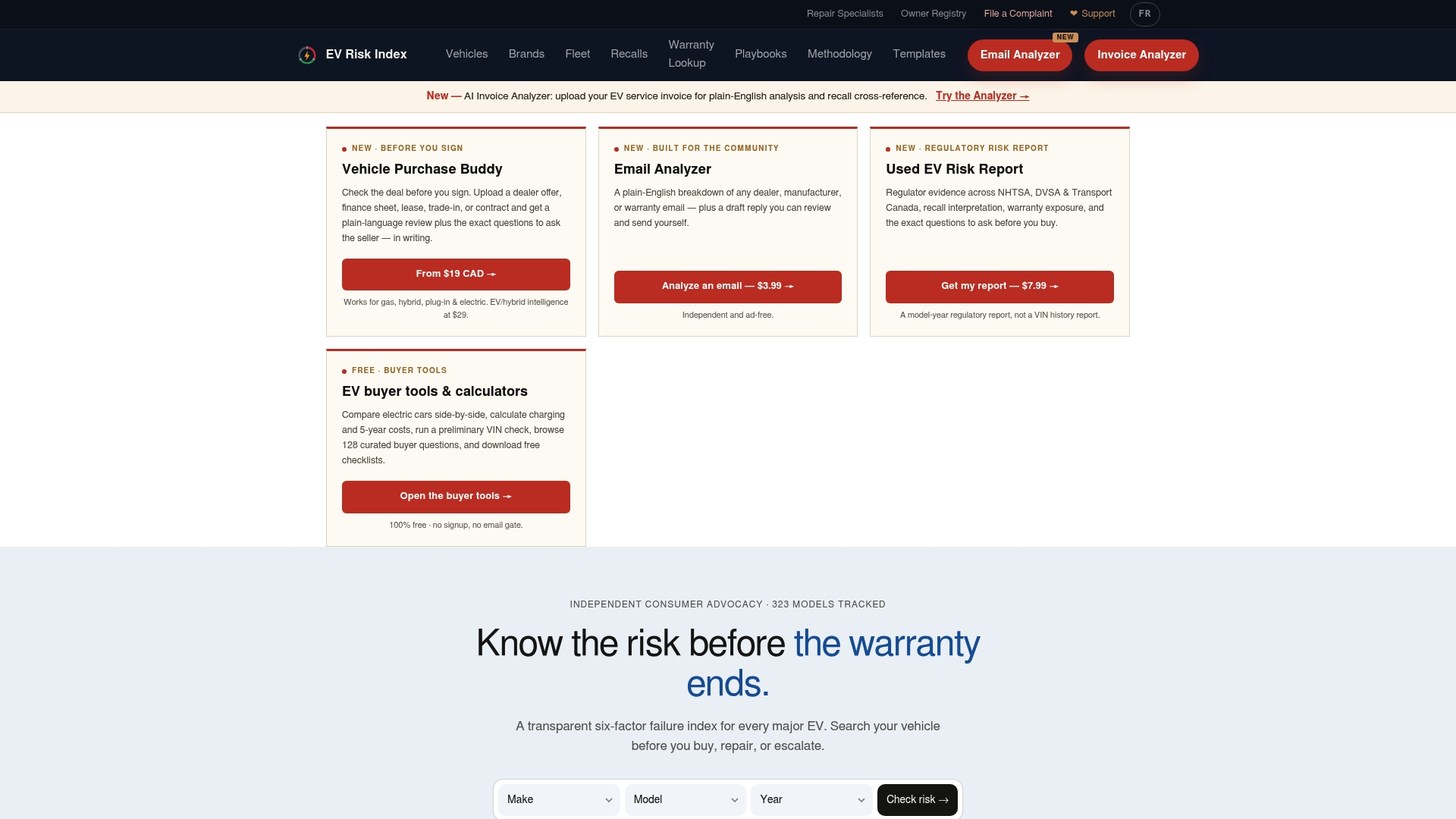
EVRiskIndex gives EV owners a practical way to review a dealer estimate before authorizing an expensive repair. Its AI Invoice Analyzer examines invoice line items, highlights labor or parts entries that deserve clarification, and helps identify inconsistencies, repeated repairs, or missing details worth questioning. Owners can also check recall information and review model-specific risk data. The goal is not to declare an overcharge or misdiagnosis, but to give owners a clearer, documented basis for asking better questions, seeking a second opinion, or supporting a warranty escalation before work begins.
Sources
-
How Much Does an EV Battery Replacement Cost? | AAA Automotive
-
Electric Car Battery Replacement Cost Explained | Find My Electric