
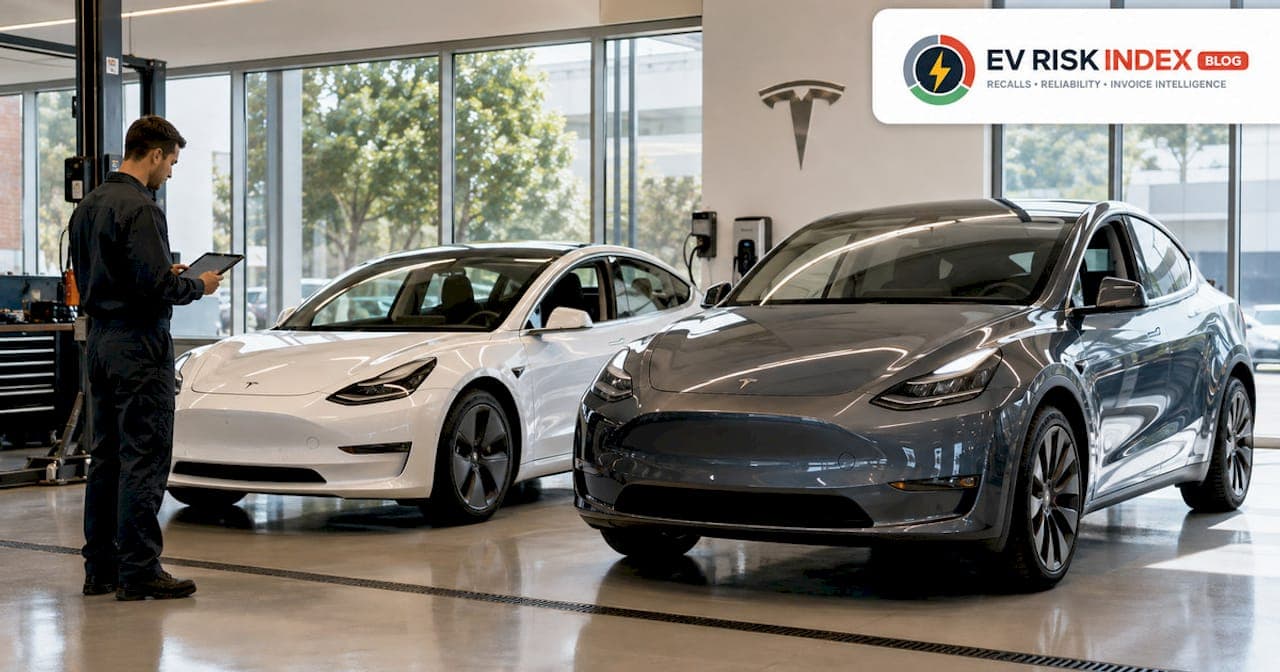
The Tesla Model 3 and Model Y are strong starting points for U.S. buyers, but there is no single reliability score that makes one Tesla model the clear winner across every model year.
Model year matters. So do recalls, service history, battery condition, suspension, electronics, and previous repairs. In July 2026, NHTSA opened an investigation covering certain 2018–2020 Model 3 and 2021–2023 Model Y vehicles over reported front suspension-link failures—another reason buyers should evaluate the specific year and VIN rather than rely on a model-wide ranking.
For most used-Tesla buyers:
-
Model 3: Established, relatively simple choice with a large ownership history.
-
Model Y: Strong mainstream option, but year-specific issues still matter.
-
Model S: Older examples require closer review of electronics, suspension, and service history.
-
Model X: Added complexity, including falcon-wing doors, warrants careful inspection.
-
Cybertruck: Long-term reliability data remains limited; VIN-specific recalls and service history matter most.
The safest Tesla purchase is not simply the model with the best headline score—it is the individual vehicle with a verified history, completed recalls, healthy battery, and documented repairs.
Key Takeaways
The Tesla Model 3 and Model Y are strong starting points for used-Tesla buyers, but reliability varies by model year, VIN, recall history, battery condition, and previous repairs. No single public score should be treated as a definitive ranking.
| Point | Details |
|---|---|
| Model 3 remains a strong candidate | Its large ownership base and relatively simple design make it worth considering, but buyers should still verify year-specific safety issues and service history. |
| Model Y needs year-specific review | Model Y can be a strong choice, but buyers should not assume every post-2022 vehicle carries the same reliability profile. |
| Model X adds more complexity | Falcon-wing doors, sensors, suspension, and additional hardware make a thorough pre-purchase inspection especially important. |
| Reliability scores need context | Predicted ratings, owner surveys, recalls, investigations, and service history measure different things. Use several signals rather than one headline score. |
| Verify the specific VIN | Check recalls, battery condition, service records, and previous repair invoices before buying. EVRiskIndex can help organize this information and highlight items worth further verification. |
Table of Contents
-
What should you check before buying a used Tesla?
-
Check the Tesla battery warranty
-
Check battery health—not just displayed range
-
The best used Tesla is the one you verify
-
How EVRiskIndex can help before you buy
-
Bottom line
Which Tesla Is Most Reliable? A Side-by-Side Comparison
The Model 3 and Model Y remain the strongest starting points for many Tesla buyers, but no current dataset supports calling one model universally “the most reliable” across every model year. CarBuzz’s 2026 analysis favors the Model 3 based on combined reliability, maintenance, and public-data signals, but buyers should treat rankings as one input—not a substitute for checking the specific vehicle.
| Model | Current Reliability Picture | Main Areas to Verify | Complexity | Used-Buyer Guidance |
|---|---|---|---|---|
| Tesla Model 3 | Strong candidate with a large ownership history | Suspension, electronics, previous repairs | Low–moderate | Check VIN, recalls, battery health, and service history |
| Tesla Model Y | Strong mainstream candidate | Suspension, build quality, electronics | Moderate | Evaluate by model year and VIN rather than assuming newer automatically means safer |
| Tesla Model S | Mature platform, but age matters significantly | Suspension, electronics, battery and older hardware | Moderate–high | Newer examples may reduce age-related exposure, but inspect the individual vehicle |
| Tesla Model X | More mechanically complex | Falcon-wing doors, sensors, suspension, electronics | High | Thorough pre-purchase inspection is especially important |
| Tesla Cybertruck | Long-term reliability data remains limited | Recall history, body hardware, steering/suspension and service history | Still developing | Avoid broad “best year” claims; verify VIN and production history |
Model 3: The Model 3 remains one of Tesla’s strongest used-buy candidates, but there is an important current qualification. NHTSA opened investigation PE26006 on July 29, 2026 covering an estimated 1,198,300 2018–2020 Model 3 and 2021–2023 Model Y vehicles after receiving 156 complaints alleging front lower lateral-link detachment. NHTSA is investigating the cause, scope, and safety implications; an investigation is not the same as a recall.
Model Y: Model Y is also a strong candidate, particularly for buyers needing SUV space, but the same NHTSA investigation includes 2021–2023 Model Y vehicles. That means we should not label all post-2022 vehicles automatically “safe” or recommend a blanket model-year range.
Model S: Model S has been in production long enough that age and configuration can matter as much as the model name. Older examples deserve closer inspection of suspension, electronics, battery condition, previous repairs, and remaining warranty coverage.
Model X: Model X adds mechanical and electronic complexity through features such as its falcon-wing doors. Rather than declaring it Tesla’s “least reliable” model, buyers should recognize that additional systems create more items that should be inspected and tested before purchase.
Cybertruck: Long-term ownership data is still developing, so claims that later production is definitively “more reliable” are premature. It has also been subject to significant recalls; for example, NHTSA recall 25V-170 covered 46,096 model-year 2024–2025 Cybertrucks because an exterior cant-rail panel could separate from the vehicle.
Bottom line: Model 3 and Model Y are sensible places to start, but the most reliable Tesla is ultimately the specific vehicle with a verified VIN, completed recalls, documented service history, healthy battery, and no unresolved faults.
How Do Tesla Reliability Ratings Actually Work?
Tesla reliability ratings come from different sources, and no single score tells the whole story. Predicted reliability, owner surveys, recalls, investigations, and VIN-specific service history measure different things.
Consumer Reports predicted reliability uses owner-reported problem data and model history to estimate future reliability. It can be useful for comparing established vehicles, but predictions for newly redesigned models naturally have less long-term ownership evidence behind them.
J.D. Power Quality & Reliability ratings combine information about problems experienced by owners, including initial vehicle quality and longer-term dependability. They are useful for comparison, but they should not be interpreted as a complete measure of battery, drivetrain, or very-high-mileage durability.
NHTSA recalls and investigations provide a different type of evidence. Recalls identify safety defects or federal safety-standard noncompliance requiring corrective action, while an investigation means NHTSA is evaluating a potential safety issue—it does not automatically mean a defect or recall has been confirmed.
For a used Tesla, the most useful approach is to combine:
-
Reliability ratings: useful for broad model comparisons.
-
Owner surveys: useful for identifying recurring reported problems.
-
NHTSA recalls and investigations: important for current safety issues.
-
VIN-specific recall history: essential before purchasing.
-
Service records and battery condition: critical for understanding the individual vehicle.
EVRiskIndex Tip: Treat reliability scores as signals, not verdicts. A Tesla with an average predicted rating but documented service history, completed recalls, and a healthy battery may be a better purchase than a higher-rated vehicle with missing records or unresolved faults.
How to Pick the Most Reliable Tesla for Your Situation
The best Tesla for you depends on whether you are buying new or used, the specific model year, warranty coverage, and how much repair complexity you are comfortable accepting.
For new buyers
-
Verify the exact configuration. Tesla changes hardware and features during production, so confirm the equipment included on the vehicle you are actually buying rather than relying on information from another model year.
-
Check the VIN for recalls before delivery. NHTSA provides a VIN-specific recall lookup, including for recently manufactured vehicles.
-
Consider Model 3 and Model Y first. Both remain sensible mainstream choices, but evaluate the specific vehicle rather than assuming either model is automatically more reliable.
-
Understand the warranty. Tesla's Basic Vehicle Limited Warranty is 4 years/50,000 miles in the U.S. Battery and Drive Unit coverage lasts 8 years, with mileage limits varying by model and configuration and minimum 70% battery-capacity retention during the applicable period.
-
Review current recalls and safety issues. Recalls, investigations, and service history can change over time, so check the latest information close to delivery.
For used buyers
-
Avoid blanket “best year” rules. Reliability can vary within the same model year, and current investigations or recalls can change the risk picture.
-
Request available service records. Look for battery, drive-unit, suspension, steering, door, camera, collision, and other significant repairs.
-
Inspect model-specific systems. Pay particular attention to suspension and steering, and test the Model X's falcon-wing doors and related hardware carefully.
-
Check battery health. Supported Teslas provide Battery Health information through the Service menu, and some can run Tesla's Battery Health Test while connected to an AC charger.
-
Verify the VIN, mileage, warranty, and recall status. These provide much better evidence about an individual used Tesla than its model name alone.
Red flags worth investigating before purchase:
-
Open or unresolved safety recalls.
-
Warning messages or faults that have not been clearly diagnosed.
-
Major battery or drive-unit work with incomplete documentation.
-
Significant gaps in available repair history.
-
Repeated suspension, steering, door, or electronic repairs.
-
A seller unwilling to explain major previous repairs.
EVRiskIndex Tip: The goal is not to find a supposedly “perfect” Tesla model year. It is to find a specific vehicle with a verifiable history, healthy battery, completed recalls, and no unexplained major faults.
Model-by-Model Tesla Risk Profiles and Repair Considerations
Understanding which systems deserve closer inspection is more useful than relying on generic repair-cost estimates. Tesla repair prices vary by model year, part number, location, warranty status, and the actual diagnosis.
Tesla Model 3
The Tesla Model 3 remains one of the more straightforward models to evaluate because of its large ownership history and simpler sedan design. Buyers should review the vehicle for previous suspension, electronics, battery, drive-unit, body, and infotainment repairs rather than assuming one system will always be the primary risk.
There is also an important current consideration: NHTSA investigation PE26006 covers certain 2018–2020 Model 3 vehicles after reports involving front lower lateral-link separation. An investigation does not mean every affected vehicle has a defect or that a recall has been issued, but buyers should check the VIN and relevant service history.
Avoid universal repair figures such as "$500–$1,500 for a touchscreen" or "$150–$400 for camera calibration." Actual Tesla repair costs depend on the component and vehicle, so obtain a VIN-specific written estimate when evaluating a known problem.
Tesla Model Y
The Tesla Model Y is another strong mainstream Tesla candidate, but reliability should be evaluated by the individual vehicle rather than assuming all newer production years are automatically better.
Buyers should pay particular attention to suspension and steering, electronics, battery condition, previous collision or body repairs, and documented service history. Certain 2021–2023 Model Y vehicles are included in the same current NHTSA lower-lateral-link investigation affecting Model 3.
As with Model 3, avoid generic prices for ADAS sensors, cameras, or other repairs. Tesla provides public service and repair information, but the actual customer cost depends on the specific repair, parts required, and warranty coverage.
EVRiskIndex Tip: Use model-level failure patterns to know what to inspect—but use the VIN, diagnostic evidence, service history, warranty status, and written repair estimate to determine the actual risk and cost.
Tesla Model S
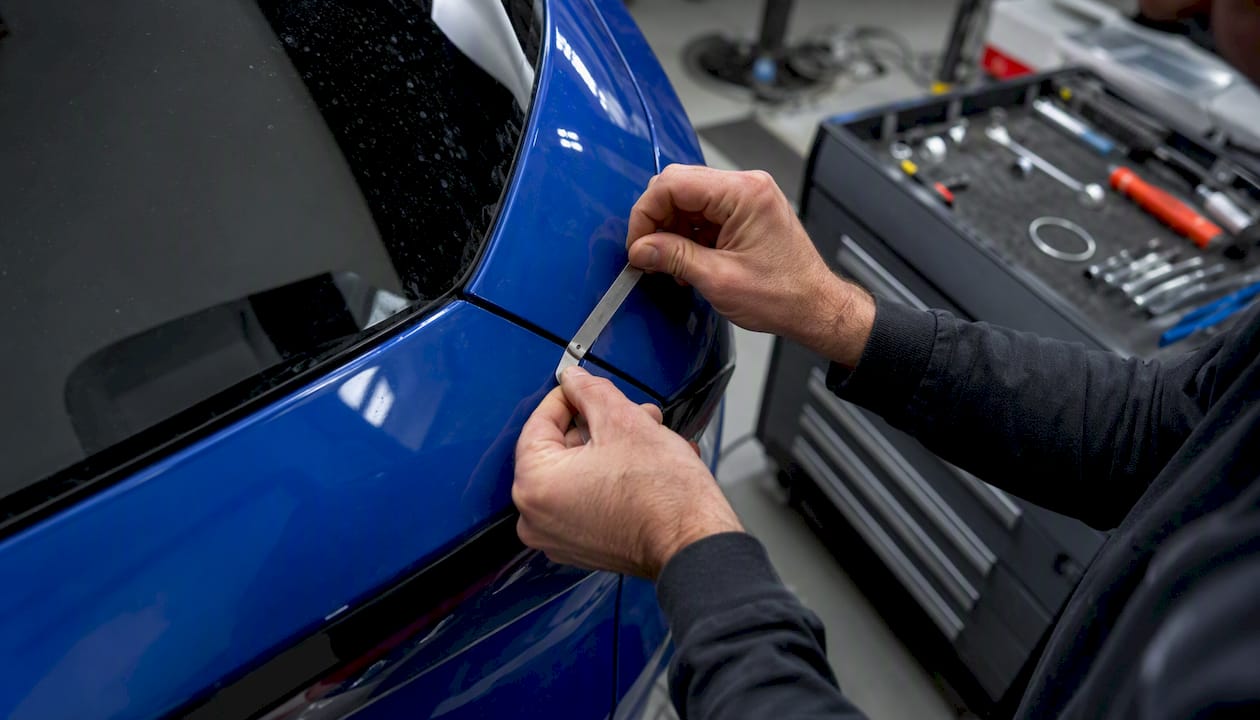
The Tesla Model S has a long production history, so model year, age, configuration, and previous repairs matter significantly. Older vehicles deserve closer inspection of the air suspension, electronics, battery, drive unit, and other aging components. Tesla’s service documentation confirms that Model S air-suspension systems contain separately serviceable components such as air springs, compressors, lines, and valve assemblies.
Rather than assuming post-2021 vehicles are automatically the safest choice or assigning a generic repair price, buyers should review the individual vehicle’s service history and obtain a written estimate for any known fault.
Tesla Model X
The Model X adds complexity through its falcon-wing doors, suspension, sensors, and electronics. Tesla confirms that the falcon-wing doors use multiple sensors to detect people and objects while operating.
Buyers should test both falcon-wing doors repeatedly during an inspection and review any previous door, sensor, suspension, battery, or electrical repairs. Avoid generic claims such as “$1,500–$3,000 per door” because actual repair costs depend on the failed component, diagnosis, model year, and labor required.
Tesla Cybertruck
The Cybertruck has a much shorter ownership history than Tesla’s established models, so long-term reliability conclusions remain less certain. Buyers should pay particular attention to recall history, body hardware, suspension and steering, electronics, and previous service work.
Because its construction and service procedures differ from conventional vehicles, repair-cost assumptions from Model 3, Model Y, Model S, or Model X should not simply be transferred to Cybertruck. Current recall and investigation information should be checked for the specific VIN before purchase; NHTSA maintains searchable current safety records.
| Model | Areas Worth Checking | Repair Complexity | Used-Buyer Approach |
|---|---|---|---|
| Model 3 | Suspension, electronics, battery, previous repairs | Low–moderate | Verify VIN, battery health and service history |
| Model Y | Suspension, steering, electronics, battery | Moderate | Review model year, VIN and current safety information |
| Model S | Air suspension, electronics, battery, aging hardware | Moderate–high | Age and service history matter significantly |
| Model X | Falcon-wing doors, sensors, suspension, electronics | High | Thoroughly test complex systems before purchase |
| Cybertruck | Recalls, body hardware, steering/suspension, electronics | Still developing | Rely on VIN-specific history rather than broad reliability rankings |
EVRiskIndex Tip: Do not use generic repair-price tables to decide whether a used Tesla is affordable. Identify the actual fault, verify warranty and recall status, and obtain a vehicle-specific written estimate before assigning a repair cost.
Which Used Tesla Years Should You Target or Avoid?
There is no universal “best” or “worst” Tesla model year. Production changes, recalls, investigations, battery condition, mileage, and service history can make two vehicles from the same year very different purchases.
Model 3: Early-production vehicles deserve closer inspection, particularly for documented repairs and suspension history. NHTSA's current investigation covers certain 2018–2020 Model 3 vehicles following reports involving front lower lateral-link separation. The investigation is ongoing and is not itself a recall.
Model Y: Avoid assuming that 2022 or newer automatically means lower risk. The same current NHTSA investigation includes certain 2021–2023 Model Y vehicles. Verify the VIN, suspension history, recalls, and overall service record.
Model S: Age matters considerably. Older examples should receive extra scrutiny for battery condition, suspension, electronics, previous repairs, and remaining warranty coverage rather than being rejected solely because of model year.
Model X: Older vehicles may carry more age-related repair exposure, while newer vehicles can still develop problems. Test the falcon-wing doors, suspension, electronics, and other major systems and review their repair history.
Cybertruck: Long-term reliability data remains limited. Rather than declaring 2024, 2025, or 2026 a preferred year, check the specific VIN for recalls and documented repairs before purchase.
What to Verify Before Any Used Tesla Purchase
-
Check the VIN for open recalls and confirm completed recall work.
-
Request available service records, especially for battery, drive unit, suspension, steering, and major electronic repairs.
-
Check battery health. Supported Tesla vehicles provide Battery Health information, and some can run Tesla's Battery Health Test through the Service menu.
-
Confirm remaining warranty coverage. Tesla Battery and Drive Unit warranty terms vary by model and configuration.
-
Inspect the individual vehicle, including tires, suspension, doors, warning messages, charging operation, and signs of previous collision repair.
-
Investigate unexplained repairs or missing documentation before committing to the purchase.
EVRiskIndex Tip: Use model year to identify what deserves closer attention—not as an automatic buy-or-avoid verdict. The VIN, battery condition, recall status, and documented repair history tell you much more about the Tesla you are actually buying.
Do Teslas Really Last 500,000 Miles?
The 500,000-mile Tesla claim should not be treated as a normal life expectancy or guarantee. Some individual Teslas have accumulated very high mileage, but there is not enough fleet-wide evidence to say a typical Model 3, Model Y, Model S, or Model X will reach 500,000 miles without major repairs.
Tesla’s own published battery data is more useful than the headline claim. Tesla has reported that Model S and Model X battery packs generally retain substantial capacity after 200,000 miles, while emphasizing that battery degradation varies with vehicle age, mileage, charging behavior, and use.
For used buyers, the better question is not “Will this Tesla reach 500,000 miles?” but:
-
What is the battery’s current health?
-
What major repairs have already been performed?
-
Are there unresolved recalls or faults?
-
What condition are the suspension, steering, electronics, and drive unit in?
-
How well has this specific vehicle been maintained?
EVRiskIndex Tip: High mileage alone does not prove a Tesla is unreliable—or reliable. Battery condition, repair history, recalls, and the condition of the individual vehicle matter far more than a 500,000-mile headline.
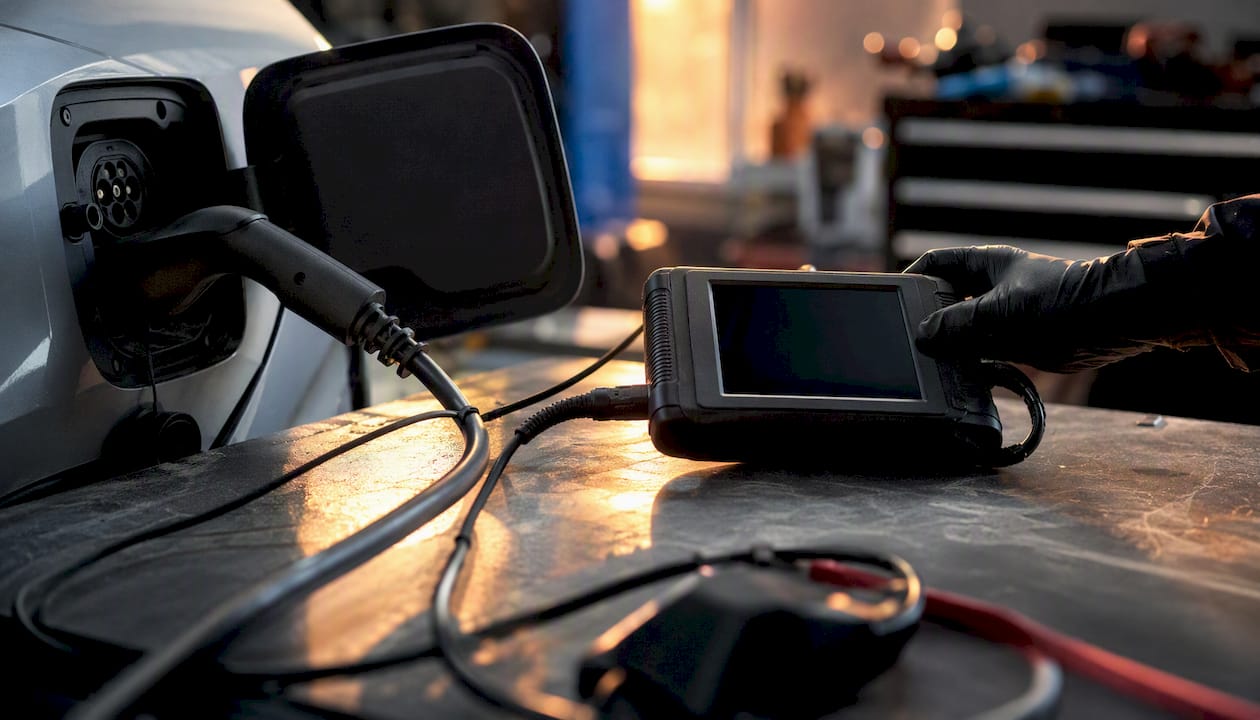
The battery and drive unit can remain serviceable at high mileage, but they are only part of the vehicle. Tesla reports that Model 3 and Model Y batteries lose about 15% of capacity on average after 200,000 miles, while noting that battery aging varies by vehicle and use.
At higher mileage, buyers should also pay attention to:
-
Suspension wear: Control arms, bushings, links, wheel bearings, and alignment components can require inspection or replacement as mileage accumulates. Tesla’s service documentation includes specific inspection and replacement procedures for these components.
-
Battery condition: Remaining capacity matters, but so do battery faults, charging performance, and warranty status.
-
Electronics and hardware: Older vehicles may have earlier-generation computers, cameras, infotainment systems, and other components.
-
Previous repairs: A well-documented higher-mileage Tesla may be a better purchase than a lower-mileage vehicle with unexplained faults or missing service history.
For very-high-mileage ownership, Model 3 and Model Y are sensible models to evaluate, but neither should receive an automatic longevity advantage without inspecting the individual vehicle.
EVRiskIndex Tip: Check battery health as part of the pre-purchase review, but don't rely on SoH alone. On supported Teslas, the Battery Health Test is available through Controls > Service > Battery Health; combine that result with the VIN, recalls, diagnostic alerts, and service history.
How EVRiskIndex Helps You Validate a Specific Used Tesla
Model-level reliability data is useful, but the condition and history of the specific Tesla you are considering matters more.
EVRiskIndex helps buyers bring key vehicle-risk information together before purchase, including recall information, model-specific risk data, and repair-document review.
-
Recall and vehicle-risk review: Check applicable recall information and known model-specific risks before relying on a seller’s claim that the vehicle has no outstanding issues.
-
AI Invoice Analyzer: Upload dealer or repair invoices to organize line items, identify repeated repairs, unclear charges, or inconsistencies, and highlight items that deserve further verification.
EVRiskIndex Tip: If a seller provides repair invoices, review them before purchase. Previous battery, drive-unit, suspension, steering, or ADAS work can reveal important questions about the vehicle’s history.
EVRiskIndex also provides consumer tools and escalation templates that can help owners document warranty or repair concerns. The platform does not prove an overcharge or misdiagnosis; its role is to help buyers understand the evidence, identify what needs clarification, and make a more informed decision before purchasing a used Tesla.
What Buyers Often Underestimate About Tesla Reliability
Tesla reliability discussions often focus on visible issues such as panel gaps, paint, trim, and door alignment. Those can matter, but they should not distract from higher-value checks involving the vehicle’s battery, drive unit, suspension, steering, electronics, ADAS hardware, recalls, and repair history.
A cosmetically clean Tesla can still have expensive unresolved issues, while a vehicle with minor appearance flaws may have a well-documented service history and healthy major systems.
The practical takeaway is simple: do not judge reliability by appearance alone. Check the VIN, review available service records, verify battery condition, and investigate any major previous repairs or warning messages before purchase.
EVRiskIndex Helps Reduce Used Tesla Purchase Risk
Choosing a model or model year is only the starting point. The more important step is verifying the specific Tesla you are considering.
EVRiskIndex can help buyers review recall information, model-specific risks, and repair documentation before purchase—giving them a clearer picture of what deserves further inspection or explanation before they commit.
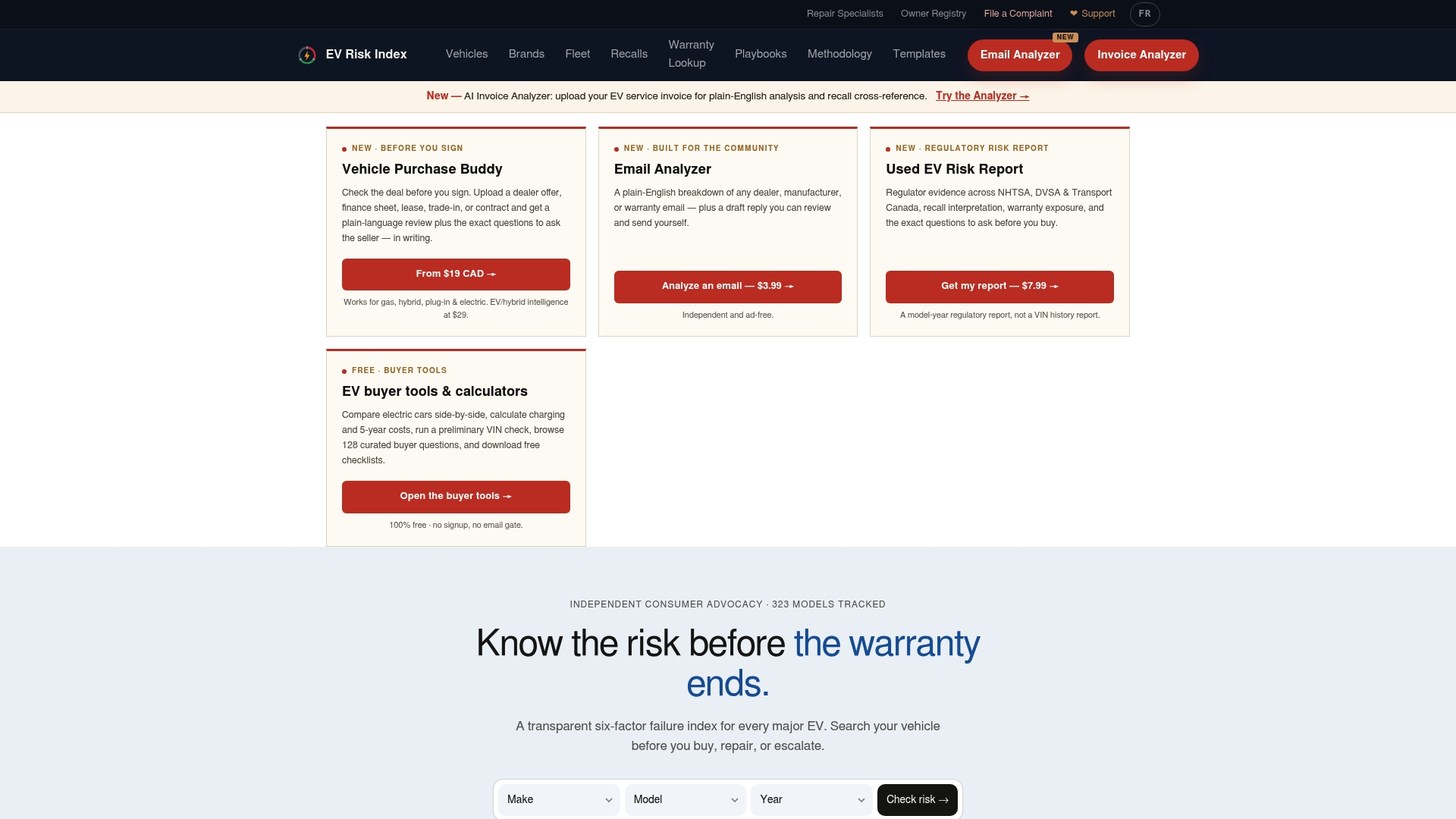
Evriskindex gives used Tesla buyers three concrete protections in one place: consolidated recall and TSB checks across NHTSA and international regulators, AI-powered invoice analysis that flags labor overcharges and undisclosed component replacements, and dispute templates for post-purchase warranty challenges. You do not need to cross-reference four government databases or guess whether a repair quote is reasonable.
-
Faster invoice validation: Upload a dealer or seller invoice and receive a flagged analysis in minutes, not hours of manual research.
-
Consolidated recall and TSB checks: One search surfaces outstanding recalls and relevant service bulletins across multiple regulatory sources.
-
Dispute templates: Pre-built goodwill letters and escalation templates for out-of-warranty repair negotiations.
Run a VIN check or upload a repair invoice at Evriskindex before you finalize any used Tesla purchase.
Sources
These are the primary sources used in this article. Each serves a distinct verification purpose.
-
Tesla Cars, SUVs, & Trucks
-
The Most Reliable Tesla Model For 2026 Isn’t The One You’d Expect